




Morning Market Snapshot – Wednesday, Jan 21, 2026
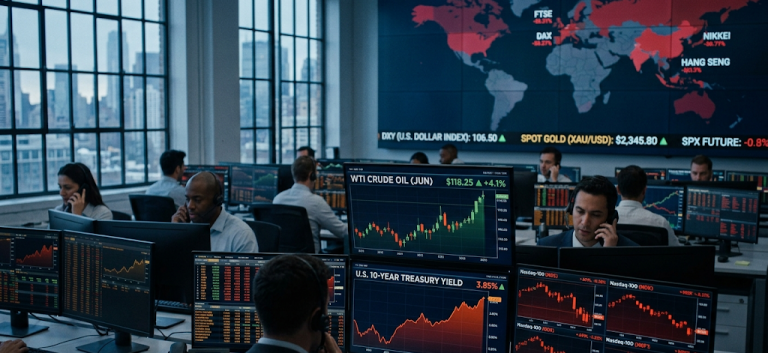
Overnight markets remained gripped by a single macro theme: renewed “Sell America” risk, as geopolitical tensions over President Donald Trump’s stance on Greenland and related tariff threats kept investors defensive into Asia and Europe. The immediate readthrough across assets was consistent. Risk was marked down, safe havens were bid, and liquidity-sensitive corners stayed jumpy ahead of Trump’s expected remarks at the World Economic Forum in Davos later today.
In global equities, the overnight tone remained cautious after a sharp U.S. selloff that continued to echo into Asia. Global shares are falling again, extending the slide, as investors remain focused on whether foreign holders reduce exposure to U.S. assets. Asian stocks extended losses for a third session, with the broader MSCI Asia-Pacific ex-Japan index down about 0.5% in Reuters’ overnight snapshot, while Japan’s Nikkei fell again.
Rates and bond volatility remained a second pressure point. A bruising prior-session selloff in long-dated Japanese bonds, followed by a rebound overnight as buyers returned and yields retraced much of the spike. This “sell Japan” angle fed into broader bond-market unease, even as U.S. long-end yields edged lower by mid-morning in the latest wrap.
FX delivered one of the clearest signals. Reuters noted the U.S. dollar suffered its biggest one-day drop in over a month in the prior leg of the move, then steadied somewhat, as investors weighed whether the broader narrative is shifting from classic risk-off (USD up) to “policy risk premium” (USD pressured).
Commodities told the same story in brighter colors. Gold surged again to fresh records, with a new high near $4,865/oz in the global wrap, and a separate Reuters metals report showing spot gold above $4,800, around $4,885/oz, in the latest push as the dollar weakened and haven demand persisted. Oil slipped in the risk-off tone, despite supply-related headlines, as demand and growth concerns dominated the pricing impulse.
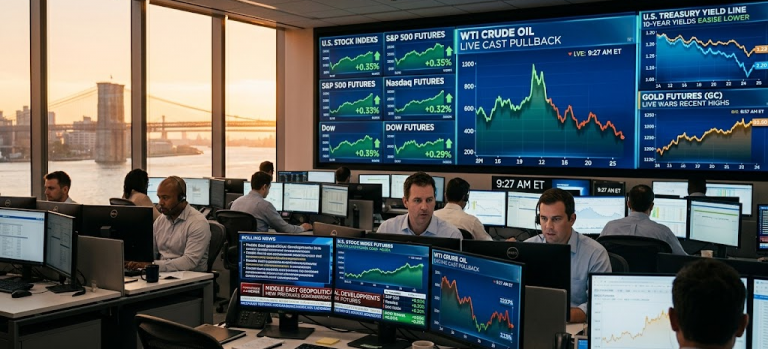
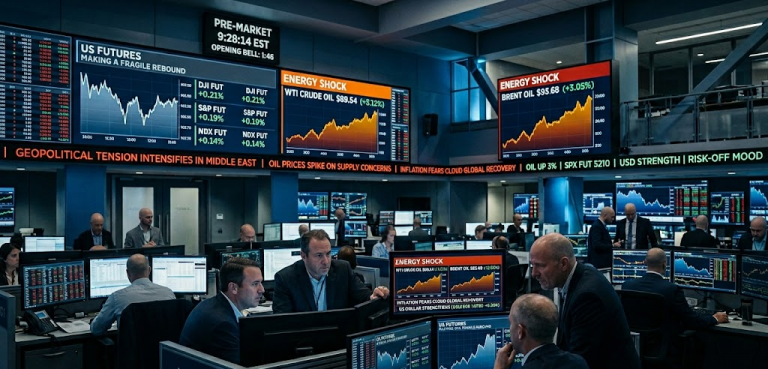
Into the U.S. premarket, futures stopped sliding and turned into a stabilisation test. U.S. stock index futures were steadier early Wednesday as attention shifted to Davos and the next set of catalysts, including earnings and data.
Pre-Market News Catalysts (2–4 U.S. stocks moving)
- Netflix (NFLX): Down sharply premarket (roughly -6% to -7% range) even after beating forecasts, as the market reacted to guidance and the company’s posture around a Warner Bros. Discovery bid battle.
- United Airlines (UAL): Up about +3% to +4% premarket after an upbeat outlook supported by resilient demand from higher-income and corporate travelers.
- Kraft Heinz (KHC): Down roughly -4% to -5% premarket after a filing suggested Berkshire Hathaway may reduce or exit its large stake.
- Halliburton (HAL): Up modestly premarket after earnings and revenue beat expectations.
The Day’s Debate (The Bull vs. Bear Case)

The Bull Case: The bullish interpretation is that last night’s move was a fear flush that is already transitioning into price discovery rather than panic. Futures steadied into the U.S. morning, suggesting sellers are less aggressive once the initial shock is absorbed and the market has time to re-anchor around known events like Davos remarks, scheduled data, and earnings. Bulls also point to the bond market attempting to regain its footing. Japan’s long-dated bond selloff was deemed extreme, then overnight buyers returned, helping relieve the sense of a one-way, forced deleveraging trade in global duration.
In that framing, gold’s surge is seen less as a signal of systemic stress and more as rational hedging into an event-driven week. Even with gold punching to new highs around $4,865 to $4,885 per ounce, the rest of the complex is not breaking down uniformly, and some risk assets are trying to stabilize into the U.S. open. Bulls argue that if Trump’s Davos tone is even slightly de-escalatory, the market can quickly reprice tail risk lower, allowing equities to rebound as volatility compresses.

The Bear Case:
The bearish view is that the market is not merely reacting to a headline but repricing a regime in which alliances, tariffs, and policy unpredictability are persistent inputs into risk premia. Reuters’ “Sell America” framing is the bear’s anchor. If foreign selling pressure becomes a sustained flow, it hits the dollar, Treasuries, and equities simultaneously, making it difficult for any one asset class to absorb it without higher volatility.
Bears also highlight that stress did not stay isolated. Global equities extended declines, and the dollar’s sharp drop in the prior move suggests markets were not treating USD as a clean haven, a sign of unease with U.S.-origin policy risk. The surge in gold to repeated record highs reinforces that investors are paying up for protection rather than confidently rotating back into growth.
Finally, bears will say the “stabilization” in futures is fragile. The next catalyst is not a CPI print or a single earnings beat. It is a political message risk from Davos that can either soothe or inflame tensions. That makes today’s premarket calm a possible pause before the next volatility impulse, not a turning point.
The Strategic Takeaway
Overnight action was a textbook cross-asset risk signal. When equities sag, the dollar is unstable, and gold is repeatedly setting new records, the market is telling you it is pricing uncertainty that cannot be hedged with a single conventional instrument. Reuters explicitly framed the move as a “Sell America” dynamic, and the safest expression of that view has been the relentless bid for gold, now pressing into the $4,800s and beyond.
The practical play for the opening bell is to track whether stabilization is real or simply a lull. Two tells matter most. First, does gold hold near its highs even if futures try to lift it? If so, hedging demand remains dominant. Second, do long-end bonds stay calmer after the Japan-led volatility? If not, equity multiples will struggle to expand.
In short: treat today as an event-risk tape. Let headlines drive direction, but let cross-asset confirmation decide conviction.
Upcoming Session Outlook with Directional Bias
The near-term setup reads Neutral to Slightly Bearish into the open, with a clear split between price stabilization in U.S. futures and persistent demand for hard hedges. Reuters reported futures “paused” and steadied early Wednesday after the rout, but the broader global context remains defensive with equities pressured and gold at record highs.
The directional pivot is Davos. Trump’s speech has become the single most important incremental catalyst because it can change the market’s probability-weighted path for escalation. If remarks suggest negotiation and de-escalation, the market can quickly relieve some of the risk premium, likely showing up first in a weaker gold bid and stronger equity breadth. If rhetoric hardens, expect the overnight pattern to persist: gold strong, cyclicals and high-beta names fragile, and wider intraday ranges.
For traders, the bias is defensive until proven otherwise by both headline tone and cross-asset confirmation.
Disclaimer: This article is for informational purposes only and does not constitute financial, investment, or legal advice. The information provided is a synthesis of publicly available data and expert analysis and should not be considered a recommendation to buy or sell any security. Investing in the stock market involves risk, including the possible loss of principal. Past performance is not indicative of future results. Readers should consult with a qualified financial advisor to determine an investment strategy that is suitable for their own personal financial situation and risk tolerance.
Sources
- Stocks gripped by geopolitical tensions as Trump heads to Davos; bonds steady | Reuters
- US stock futures pause after Wall Street rout, eyes on Trump at Davos | Reuters
- Stock Market Today: Dow, S&P 500 and Nasdaq struggle to rally after sharp sell-off even as government bonds recover some poise; gold hits new record above $4,850; Trump to give Davos speech. – MarketWatch