


Morning Market Snapshot – Tuesday, March 10, 2026,
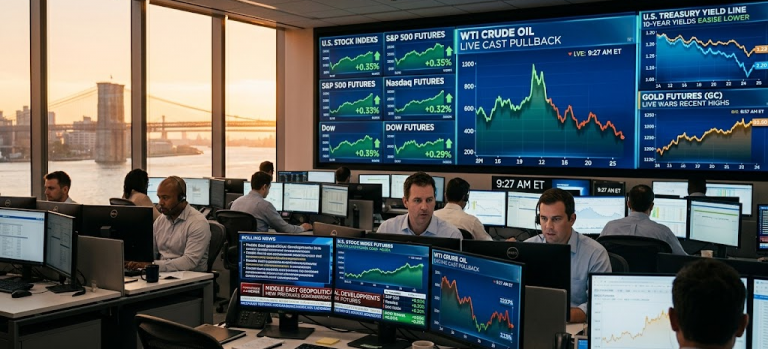
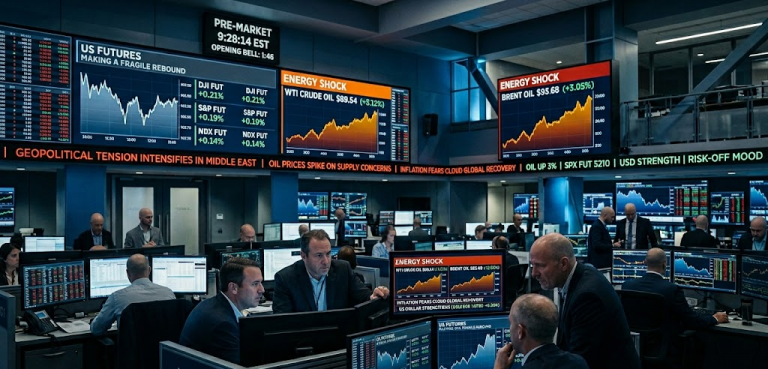
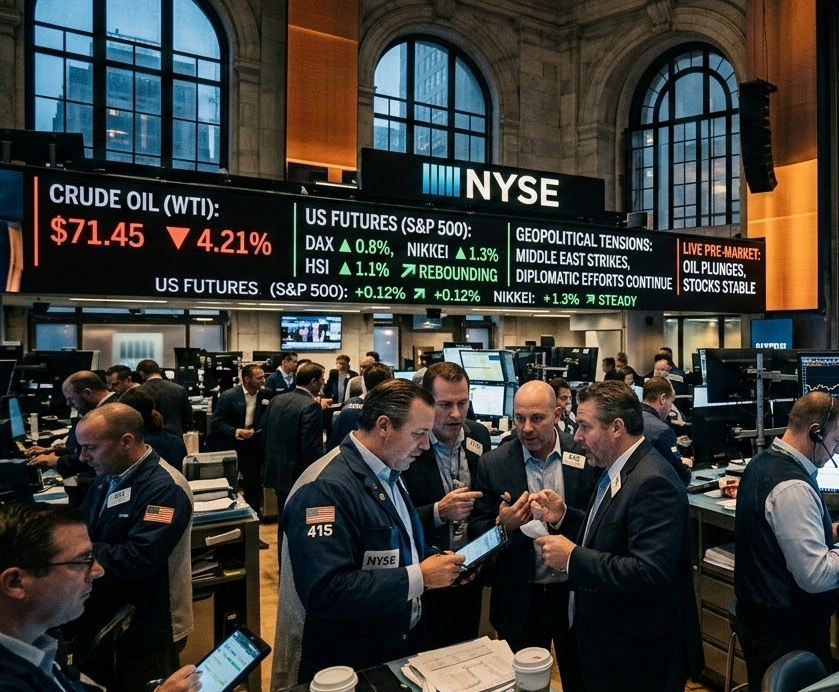
The overnight market story was a relief move after Monday’s oil shock. The main change was in crude. After surging toward $120 a barrel during the prior wave of panic, Brent and WTI both retreated sharply overnight as traders reacted to signs that governments may try to limit the supply shock and to President Trump’s statement that the Iran war could end “very soon.” That shift helped cool the most immediate stagflation fears that had rattled stocks, bonds, and rate expectations at the start of the week.
The relief in oil fed directly into risk assets overseas. Global equities rebounded across Asia and Europe as lower crude prices reduced immediate pressure on margins, inflation expectations, and consumer spending assumptions. The move looked less like a clean return to confidence and more like a partial unwind of Monday’s most extreme pricing. Markets are still trading the geopolitical path, but overnight, they shifted from pricing a severe and prolonged energy shock to pricing something shorter and more manageable.
In the U.S. pre-market, futures were roughly flat to slightly softer rather than extending the previous panic. Bloomberg’s premarket roundup showed S&P 500 futures down 0.1% and Nasdaq 100 futures little changed around 7:44 a.m. New York time, which fits the broader overnight tone: calmer, but not fully convinced. Gold remained supported, and the market remains highly sensitive to every new headline tied to the Strait of Hormuz, emergency reserve discussions, and the duration of disruption to Middle East energy flows.
The key thing traders should focus on this morning is still oil first, equities second. If crude keeps falling, the market can continue its relief bounce and rotate toward airlines, consumer cyclicals, and tech. If oil stabilizes near current levels, the open may be choppy but manageable. If crude reverses sharply higher again, the market is likely to fall back into the same inflation and growth fears that dominated the previous session. The overnight tape improved, but it did not resolve the bigger macro question. It only bought the market some breathing room before the opening bell.
Pre-Market News Catalysts
- Hewlett Packard Enterprise (HPE): HPE was one of the clearer positive pre-market stories after reporting fiscal Q1 2026 revenue of $9.3 billion, up 18% year over year, and guiding fiscal Q2 revenue to $9.6 billion to $10.0 billion. The company highlighted strong demand for networking and improved profitability in Cloud & AI.
- Kohl’s (KSS): Kohl’s was under pressure after reporting fourth-quarter net sales down 3.9% and comparable sales down 2.8%, while introducing a 2026 outlook that reinforced concerns about consumer softness.
- BioNTech (BNTX): Bloomberg flagged the stock as a major pre-market mover, with shares falling after a 2026 revenue outlook that disappointed Wall Street.
- Oil-sensitive travel and cyclicals: While not tied to a single earnings release, a fall in crude overnight improved the near-term outlook for fuel-sensitive sectors such as airlines and travel. That sector logic was one of the clearest cross-asset implications of the overnight oil reversal.
The Day’s Debate (The Bull vs. Bear Case)

The Bull Case: The optimistic read is that the overnight session marked the beginning of a normalization phase after an oversized oil panic. Crude’s retreat was large enough to change the macro tone, global stocks rebounded, and U.S. futures stopped deteriorating. That matters because the market had begun to price an inflation shock severe enough to complicate monetary policy and squeeze margins across multiple sectors. Instead, traders woke up to a tape that suggested the market may have overshot on worst-case assumptions. The discussion around a coordinated emergency reserve release also gave investors a tangible policy backstop rather than just a vague hope.
In this interpretation, the energy shock remains serious, but it is no longer being priced as an immediate runaway spiral. If oil can drift lower from here, the market may rotate back toward fundamentals such as earnings resilience, AI spending, and balance-sheet quality rather than trading every asset solely off war headlines. HPE’s earnings helped reinforce that idea by reminding the market that company-specific growth stories are still alive beneath the macro fog. The bull argument is not that risk has disappeared. It is possible that the market may already have priced a harsher energy scenario than what is actually unfolding.

The Bear Case: The pessimistic read is that the overnight rebound was mostly a reflex rally inside a still-unstable geopolitical regime. The market got a better tone in oil, but there is no real confirmation that the supply disruption risk is gone. Financial Times reporting on the energy backdrop makes clear that shipping and export stress tied to the region still matters, and Aramco’s warning about catastrophic consequences if the conflict drags on is the kind of statement traders cannot ignore. Even after the retreat, oil remains high enough to threaten consumers and keep inflation risks alive.
That matters because the market was already uneasy about the path of rate cuts before this latest shock. On top of that, Kohl’s weaker retail tone is a reminder that parts of the U.S. consumer landscape were already fragile before gasoline and freight fears intensified. The bear argument is that overnight relief may have been driven more by headlines than by actual improvement in underlying conditions. If the conflict persists, if oil traffic deteriorates again, or if hopes of a reserve release fade, the market could rapidly revisit the same stagflation fears that drove the prior selloff. In that framework, the pre-market calm is tactical, not durable.
The Strategic Takeaway
The single most important thing to keep in mind as the opening bell approaches is that the market is still trading oil as the master signal. Overnight price action across equities, futures, and sector leadership all flowed from one change: the perception that the energy shock may be less prolonged than feared a day ago. That is helpful, but it is not the same as resolution.
The market has moved from panic toward conditional relief. Traders should therefore treat early strength as dependent on crude staying contained, not as proof that the danger has passed. If oil continues to slide, the market can broaden out and lean into relief. If oil turns back up, the entire tone can deteriorate quickly.
Upcoming Session Outlook with Directional Bias
Directional bias: Slightly Bullish, but fragile. The overnight evidence supports a somewhat firmer open because oil came off the highs, overseas equities rallied, and U.S. futures stabilized. Still, this looks more like a relief bounce than a confident risk-on break. The open should lean constructive as long as crude remains under control, but the market is still one adverse headline away from snapping back into a defensive posture.
Disclaimer: This article is for informational purposes only and does not constitute financial, investment, or legal advice. The information provided is a synthesis of publicly available data and expert analysis and should not be considered a recommendation to buy or sell any security. Investing in the stock market involves risk, including the possible loss of principal. Past performance is not indicative of future results. Readers should consult with a qualified financial advisor to determine an investment strategy that is suitable for their own personal financial situation and risk tolerance.
8. Sources
- Stock Market Today: Oil Price Slides; Dow Futures Inch Lower
- Oil Prices Tumble After Trump Says Iran War ‘Very Complete’
- Oil futures slide 8% as energy ministers set to meet on emergency reserves – MarketWatch
- US Premarket Movers: BioNTech, Kohl’s, Teladoc, Vertex, Zevra – Bloomberg
- Oil Near $120 Sparks ‘Stampede to Sell’ in Stocks and Bonds – Bloomberg