
Morning Market Snapshot – March 20, 2026
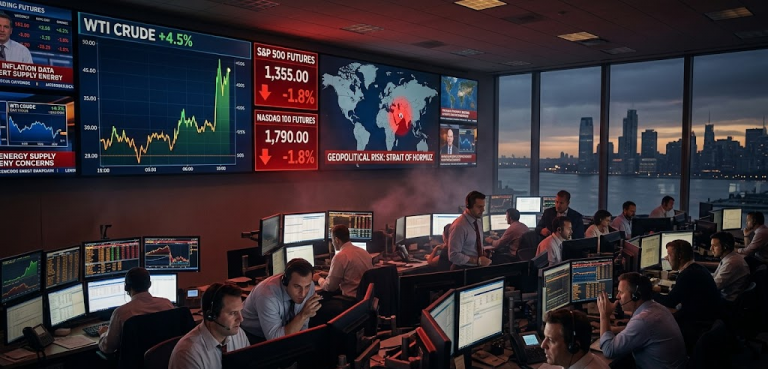
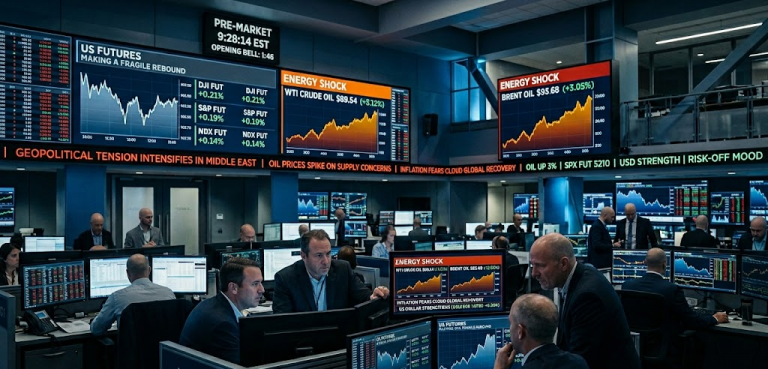
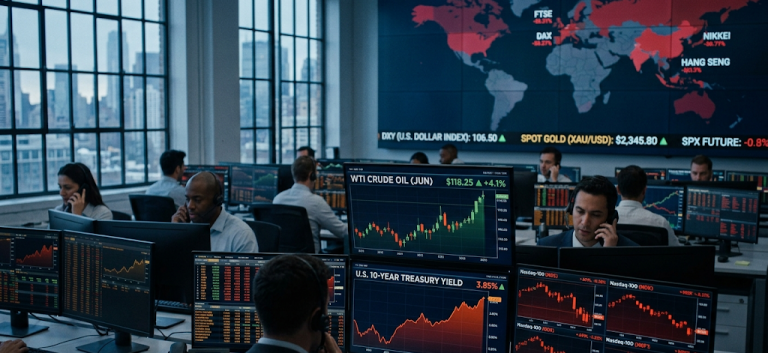
The overnight market tone is cautious and defensive. U.S. stock-index futures slipped again as traders weighed a still-elevated oil market, a worsening geopolitical backdrop, and a Federal Reserve path that now looks even less supportive for risk assets. Reuters reported that Dow E-minis were down 0.29%, S&P 500 E-minis down 0.38%, and Nasdaq 100 E-minis down 0.53%, while Brent crude hovered around $110 a barrel.
The main overnight driver remained energy. Reuters said oil rose on Friday despite U.S. and allied efforts to stabilize shipping and boost supply, with Brent up $1.67 to $110.32 and WTI up to $96.47 in one early snapshot. The market is still reacting to damage across Gulf energy infrastructure and the risk that supply dislocations last longer than policymakers want. Reuters also noted that Brent had earlier surged as high as $119 before pulling back, which tells you volatility remains extreme even when prices are off the highs.
That energy shock is feeding straight into rates expectations. Reuters reported that investors have pushed expectations for the next Fed cut out to 2027, from December 2026, reflecting a view that inflation pressure from oil and gas could keep central banks hawkish longer. Financial Times described the move across global markets as investors pricing in a “protracted energy shock,” with both stocks and bonds hit as inflation worries intensify.
Cross-asset action overnight reinforced that story. Reuters said the dollar was heading for a 1.1% weekly decline as other central banks grew more hawkish, while global bond markets remained under pressure. FT reported that Thursday’s selloff drove the Stoxx Europe 600 down 2.8% and pushed UK 10-year gilt yields to 4.89%, near their highest levels since 2008. This is not just a stock story. It is a macro repricing around inflation, energy security, and the idea that policy may stay tighter for longer than investors had expected a week ago.
The U.S. pre-market tape, though, was not uniformly negative. There were clear pockets of relative strength tied to company-specific catalysts. FedEx rallied sharply after raising its full-year forecast and signaling that demand has held up despite the energy shock. Energy names also outperformed again, with Reuters noting gains of more than 1% for Halliburton and Cheniere Energy in pre-market trading. That said, the broader mood still leaned risk-off, especially in tech after the fresh collapse in Super Micro Computer.
For traders heading into the open, the watchlist is straightforward: crude, Treasury yields, and whether leadership stays trapped inside energy and isolated earnings winners. If that remains the pattern, the market is still trading defense first and growth second.
Pre-Market News Catalysts
- FedEx (FDX) jumped about 10% after raising its full-year profit forecast to $19.30 to $20.10 per share and saying shipping demand remained steady. Reuters said investors welcomed stronger Express margins, resilient volumes, and confidence around the planned Freight spinoff.
- Super Micro Computer (SMCI) plunged roughly 26% to 27% after U.S. authorities charged three people tied to the company, including a co-founder, in an alleged scheme to smuggle $2.5 billion of AI technology to China. Reuters said the selloff threatened to wipe out nearly $5 billion in market value.
- Tegna (TGNA) rose about 9.3% after the FCC approved its $3.54 billion sale to Nexstar, despite opposition from several states. Reuters said the deal would expand Nexstar’s reach to about 80% of U.S. TV households.
- Halliburton (HAL) and Cheniere Energy (LNG) gained more than 1% in pre-market trading as investors continued to rotate toward energy-linked names amid elevated oil and gas prices. Seeking Alpha also highlighted LNG as a notable mover.
The Day’s Debate (The Bull vs. Bear Case)

The Bull Case: The bullish read is that the market is absorbing a geopolitical shock, not yet a collapse in underlying U.S. demand. FedEx is the cleanest overnight example. Reuters said the company saw steady shipping demand even as fuel costs rose and Middle East routes were disrupted, and management was confident enough to raise full-year guidance. That is a useful real-economy datapoint because FedEx touches broad industrial, retail, and logistics activity. If demand is still holding there, the U.S. economy may be more resilient than futures imply this morning.
There is also a case that markets may be overpricing the immediate oil risk. Reuters reported that the U.S. and allies are actively working to secure passage through the Strait of Hormuz and are considering supply-side responses, including additional releases and steps to lift flows. Oil remains high, but it has also come off its most extreme intraday levels. That suggests traders still believe the shock can be managed if the conflict does not intensify further.
Finally, relative leadership is still visible. Energy is working, select industrials are working, and event-driven names like Tegna are being rewarded. A market with functioning leadership groups is under strain, but not disorderly.

The Bear Case: The bearish case is that the overnight move is part of a much larger macro reset. Reuters said investors have pushed expected Fed easing into 2027, which is a dramatic shift from the softer-policy assumptions that helped support equity multiples earlier this year. Once oil becomes an inflation problem instead of just a geopolitical headline, stocks lose the cushion of expected rate cuts.
FT’s framing is also hard to ignore. It said investors are now pricing a “protracted energy shock,” with both stocks and bonds under pressure at the same time. That combination is usually more dangerous than a simple growth scare because it squeezes valuations and financing conditions together. Reuters added that central banks outside the U.S. have also tilted hawkish, deepening the global inflation concern.
The company-level tape also hints at fragility. SMCI’s plunge shows how quickly high-beta tech can get repriced when confidence breaks, and the Nasdaq futures underperformance suggests traders still want less exposure to speculative growth heading into the bell. If oil stays around $110 and rate-cut hopes remain pushed out, broad equity upside becomes much harder to defend.
The Strategic Takeaway
The single most important thing to keep in mind before the opening bell is that the overnight session was driven by macro stress, not by a broad improvement or deterioration in corporate fundamentals. Oil is setting the tone, and that tone is influencing inflation expectations, Fed expectations, and sector leadership simultaneously. As long as crude stays elevated and rate-cut hopes keep moving further out, traders are likely to keep favoring energy, transport names with pricing power, and idiosyncratic event winners over broad risk exposure. The overnight message was not a panic. It was caution with selective aggression.
Upcoming Session Outlook with Directional Bias
Directional bias: Slightly Bearish.
The most likely setup for the U.S. open is a cautious, headline-sensitive session with pressure on index futures, relative strength in energy and select earnings winners, and continued weakness in high-beta tech. Unless oil breaks lower decisively or yields ease, the overnight signal points to a defensive start rather than a clean risk-on rebound.
Disclaimer: This article is for informational purposes only and does not constitute financial, investment, or legal advice. The information provided is a synthesis of publicly available data and expert analysis and should not be considered a recommendation to buy or sell any security. Investing in the stock market involves risk, including the possible loss of principal. Past performance is not indicative of future results. Readers should consult with a qualified financial advisor to determine an investment strategy that is suitable for their own personal financial situation and risk tolerance.
Sources
- Wall St futures slip as Iran war rages on, investors dial down rate cut bets | Reuters
- FedEx shares surge as investors cheer resilient demand, higher profit forecast | Reuters
- Super Micro shares plunge as US charges co-founder, 2 more for smuggling AI chips to China | Reuters
- Biggest stock movers Friday: FDX, SMCI, TGNA, and more | Seeking Alpha
- Stock market today: Dow, S&P 500, Nasdaq futures retreat as oil swings amid Iran war jitters
- Stock Market Today: Dow, S&P 500, and Nasdaq set to drop as oil rises; Super Micro shares slump as FedEx rises – MarketWatch
A realistic pre-market Wall Street scene before the opening bell, trading desks lit by red and amber screens, crude oil charts spiking near $110, S&P 500 and Nasdaq futures flashing lower, a Fed headline about delayed rate cuts, energy stocks highlighted in green, anxious but composed traders monitoring geopolitical headlines on large monitors, cinematic financial-news style, ultra-detailed, sharp lighting, modern newsroom realism.