




Morning Market Snapshot – Monday, March 3
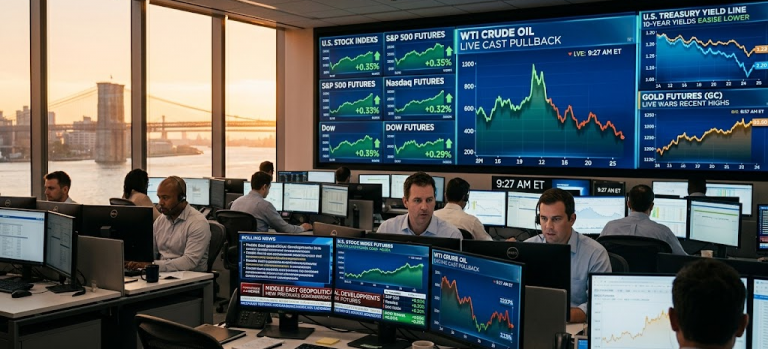
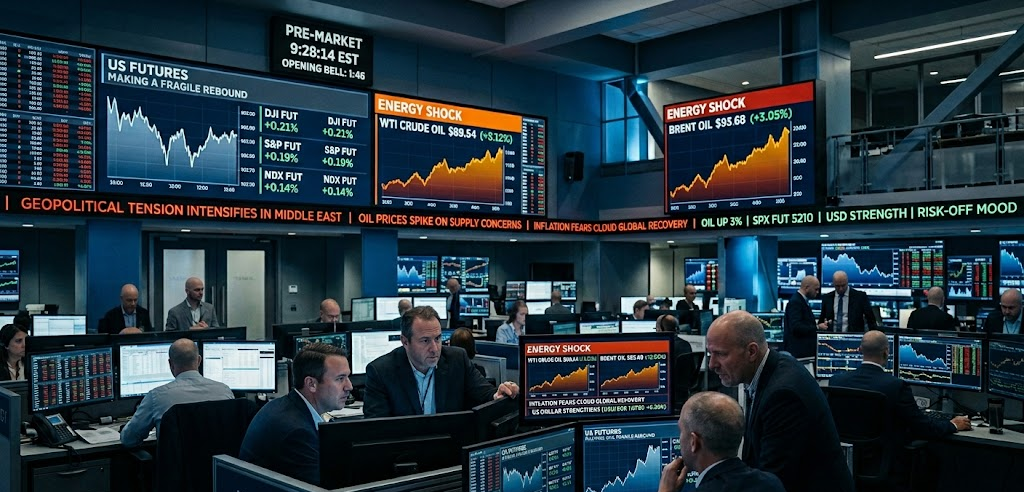
On Monday, March 30, 2026, the overnight setup was defined by one dominant force: the market is still trading the geopolitical oil shock before trading anything else. Benzinga’s pre-market screen at 7:10 a.m. EDT showed S&P fair value up 0.56%, Dow fair value up 0.54%, and Nasdaq-linked fair value up 0.50%, while oil was up 1.85%. Reuters also reported that U.S. stock futures were edging higher after last week’s selloff, but the bid looked cautious rather than confident.
Overnight, Asia absorbed the heaviest immediate pressure. Reuters said Japan’s Nikkei fell 2.8% and South Korea’s KOSPI nearly 3% as investors recalibrated for a more persistent Middle East conflict and the inflation shock that comes with a sharp jump in crude. By the time Europe opened, the tone had steadied but not healed. Reuters reported the STOXX 600 up 0.2% to 576.55, though the benchmark remained down 9% for the month and on track for its steepest monthly drop since March 2020. Energy shares led, while travel names lagged.
The cross-asset message was just as important as the index action. Reuters reported Brent above $116 a barrel and U.S. crude above $102, with Brent up roughly 59% in March, an extraordinary move that has pushed traders away from a simple “buy the dip” mindset and toward an inflation-versus-growth debate.
The dollar approached a 10-month high, with the dollar index at 100.28, while gold bounced more than 1% on Monday after a brutal month. At the same time, Reuters reported worsening liquidity conditions, wider bid-ask spreads, and more strained trading in U.S. Treasuries and European bond markets. This was not a clean flight to safety. It was a volatile repricing of inflation risk, recession risk, and policy uncertainty all at once.
For U.S. traders into the opening bell, the focus was shifting from whether futures were green to whether that green could survive another move higher in crude, another climb in yields, or a more hawkish interpretation of Fed Chair Jerome Powell’s remarks later in the day. Reuters noted that markets have largely backed away from expecting a Fed cut this year, while Morgan Stanley downgraded global equities to equal weight and lifted Treasuries and cash to overweight, even as it still described U.S. equities as the most defensive stock market in the mix. That is the overnight story in one line: modest futures relief, but against a backdrop that is still structurally hostile to risk.
Pre-Market News Catalysts
- Sysco (SYY) was down nearly 5% in pre-market trading after announcing a $29 billion deal to acquire Jetro Restaurant Depot, including debt. Investors appeared focused on the financing burden, with Reuters reporting $21 billion in new and hybrid debt, plus a pause in buybacks.
- Origin Materials (ORGN) fell 19% in pre-market trading after pushing its adjusted EBITDA run-rate breakeven target out to 2028 from 2027, a sharp negative revision that hit already-fragile sentiment in speculative growth.
- CleanSpark (CLSK) rose 3.58% in pre-market trading as the broader crypto complex bounced, with Benzinga citing a 1.39% rise in total crypto market cap and a renewed bid in bitcoin-sensitive names.
- Bitdeer (BTDR) gained 2.75% in pre-market trading after announcing work to finalize a 180 MW AI data center in Norway, designed primarily for colocation services tied to Nvidia’s Vera Rubin platform.
The Day’s Debate (The Bull vs. Bear Case)

The Bull Case: The optimistic read is that the market already knows the bad headline. Futures were green by early morning, Europe was stabilizing, and strategists were beginning to frame U.S. assets as relative shelters rather than outright risk assets. Morgan Stanley’s overnight shift was telling: it downgraded global equities overall, but still argued the United States looked more defensive than the rest of the world because of stronger earnings growth and the return of safe-haven capital.
That matters because when global money gets nervous, U.S. large caps, dollars, and high-quality balance sheets often become the first stop. There was also evidence that traders were still willing to pay for selective growth and event-driven stories, with CleanSpark and Bitdeer higher in pre-market trading, and with energy leadership providing an offset to weakness elsewhere. The bullish argument is not that the macro backdrop is good. It is that positioning has already become defensive, sentiment is washed out after five straight weak weeks for the S&P 500, and a market that can stay green while oil stays elevated may be showing early signs of resilience.

The Bear Case: The bearish read is more straightforward and, for now, more powerful. Oil remains the market’s problem. Reuters said Brent was above $116 and up nearly 59% in March, while MarketWatch cited Deutsche Bank’s Jim Reid warning that high oil is reviving stagflation fears. That is the toxic mix for equities: higher input costs, higher inflation expectations, fewer Fed cuts, tighter financial conditions, and weaker real growth. The dollar’s move toward a 10-month high adds another layer of pressure, especially for global risk appetite and for commodities-importing economies.
Reuters also reported stressed liquidity and wider spreads in Treasuries and bond markets, a warning that market plumbing is becoming less forgiving. Add in the fact that major U.S. indexes have already slipped into correction territory or close to it after five straight weeks of losses, and the risk is that any early bounce simply becomes another chance to reduce exposure. In that framework, a small futures rebound is noise, while crude, the dollar, and policy uncertainty are the signal.
The Strategic Takeaway
The most important thing to keep in mind before the bell is that this market is no longer reacting primarily to valuation, earnings revisions, or normal cyclical data. It is reacting to an energy shock that is now bleeding into inflation expectations, rate expectations, currency markets, and liquidity conditions simultaneously. That means traders should treat early equity strength with skepticism unless it is confirmed by at least one of three things: oil rolling over, Treasury market conditions calming, or Powell sounding more concerned about growth than inflation.
Without one of those supports, the overnight rebound in futures looks more like a pause than a turn. The better strategic posture is selective and tactical, not broad and aggressive. Energy-linked strength and idiosyncratic single-stock catalysts may still work, but the macro tape remains unforgiving.
Upcoming Session Outlook with Directional Bias
The opening tone looked fragile but not panicked. Futures were modestly positive into the U.S. pre-market, yet the overnight signal from oil, the dollar, and cross-asset volatility remained restrictive. Unless crude eases materially or Powell shifts the conversation toward growth protection, the path of least resistance still looks choppy, headline-driven, and prone to failed rallies.
Directional bias: Neutral to Slightly Bearish.
Disclaimer: This article is for informational purposes only and does not constitute financial, investment, or legal advice. The information provided is a synthesis of publicly available data and expert analysis and should not be considered a recommendation to buy or sell any security. Investing in the stock market involves risk, including the possible loss of principal. Past performance is not indicative of future results. Readers should consult with a qualified financial advisor to determine an investment strategy that is suitable for their own personal financial situation and risk tolerance.
Sources
- Reuters: Morning Bid, Crude escalation
- Reuters: U.S. stock futures edge up after selloff
- Reuters: Morgan Stanley downgrades global equities, sees U.S. as defensive
- Reuters: Dollar approaches 10-month high on Middle East escalation concerns
- Reuters: European stocks rise ahead of German inflation data
- Reuters: Gold rises as investors buy the dip, while fading rate-cut bets cap upside
- Reuters: Iran war volatility strains trading in world’s biggest markets
- Reuters: Fed Chair Powell faces inflation-growth dilemma
- Reuters: Sysco to acquire Restaurant Depot in $29 billion deal
- MarketWatch: U.S. stock futures sink, oil prices surge as Iran war shows no signs of letting up
- MarketWatch: S&P 500 set to climb alongside oil prices
- Financial Times: Oil rises to $116 as Trump stokes fears of protracted conflict
- Wall Street Journal: Oil rises, Asian equities fall on fears of widening Middle East conflict
- Benzinga: Why Are CleanSpark Shares Surging On Monday?
- Benzinga: Bitdeer Races Into AI Gold Rush With Giant Norway Facility Plan
- Seeking Alpha: Origin Materials shares drop 19% as breakeven target pushed to 2028
- GlobeNewswire: Bitdeer engages DCI to finalize development of Norway’s largest AI data center