

Morning Market Snapshot – January 9, 2026
The financial world stands at a crossroads this morning as the opening bell approaches on what many are calling “Judgment Day” for the early 2026 market cycle. Investors remain laser-focused on the 8:30 AM ET release of the December Non-Farm Payrolls report, a data point that will likely dictate the Federal Reserve’s trajectory for the remainder of the quarter. Pre-market futures are hovering near the flatline, with S&P 500 contracts edging down 0.1% and the Nasdaq 100 nearly unchanged after a period of intense volatility in mega-cap tech.
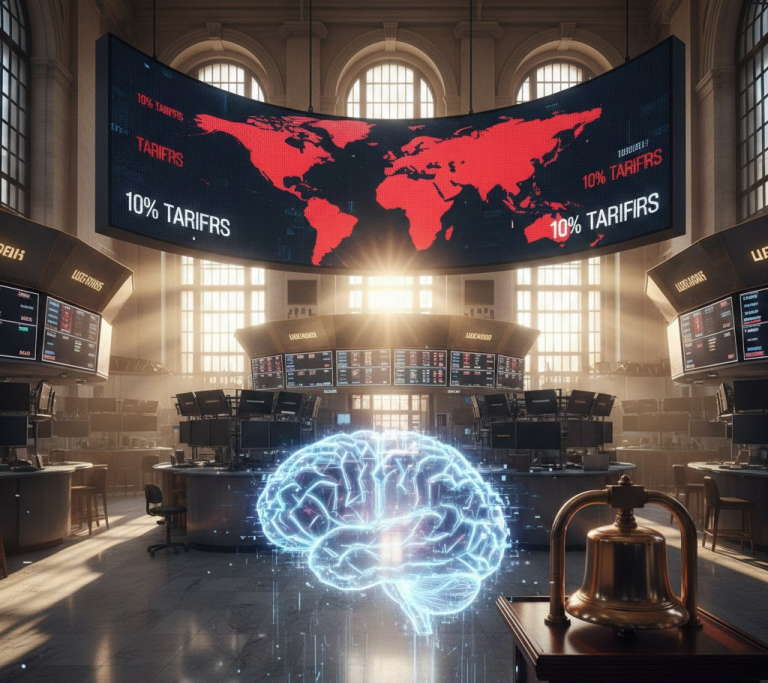
Traders are navigating a complex landscape where the “January Effect” is meeting significant geopolitical and judicial headwinds. Beyond the labor data, the U.S. Supreme Court is expected to deliver a pivotal ruling regarding President Trump’s tariff regime. This decision carries massive implications for global trade flows and corporate profit margins, particularly for multinational firms that have spent the last quarter bracing for increased protectionism. Pre-market sentiment suggests a “wait-and-see” approach as the 10-year Treasury yield holds steady near 4.18%.
The narrative of the morning is one of sector rotation. We are witnessing a clear migration away from last year’s artificial intelligence hardware darlings and into defensive or cyclical pockets, such as energy and small-cap stocks. While the tech-heavy Nasdaq struggled in the previous session, the small-cap Russell 2000 notched a record close, signaling that market participants are hunting for domestic growth opportunities that might be less sensitive to global trade spats. As we prepare for the open, the overarching question is whether the labor market has cooled enough to justify further Fed easing or if the “hot economy” narrative will force a painful repricing of interest rate expectations.
Pre-Market News Catalysts
- Glencore (GLNCY): Shares are surging in pre-market activity following reports that the company has reopened merger discussions with Rio Tinto (RIO). This potential $200 billion tie-up would create a global mining behemoth with unprecedented dominance in the copper and transition metals markets.
- Fast Retailing (FRCOY): The Uniqlo parent company saw its shares jump nearly 11% in international trading overnight. Strong earnings driven by a weaker yen and robust holiday sales across Asia are fueling investor optimism for the consumer discretionary sector.
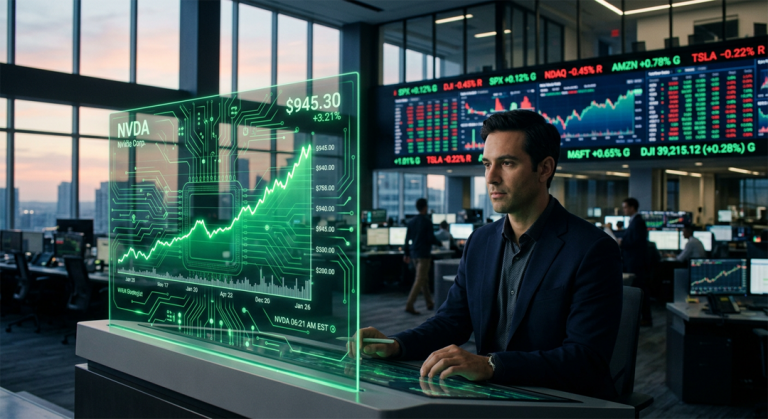
- Nvidia (NVDA): The AI chip leader is trading down roughly 2.2% in the pre-market. Sentiment is being pressured by reports of potential new order limits on H200 chips for certain international markets and a broader rotation away from high-valuation semiconductor names.
- Tesla (TSLA): Shares are up 1.0% pre-market as investors digest news of the company’s accelerating Optimus humanoid robot deployments and potential regulatory tailwinds for its autonomous driving software in the new year.
The Day’s Debate (The Bull vs. Bear Case)

The Bull Case: Optimistic strategists argue that the U.S. economy is entering a “productive capital” supercycle. They believe the current rotation out of mega-cap tech is a healthy sign of market broadening rather than a precursor to a crash. Bulls point to the resilience of the Russell 2000 and the stabilization of the labor market as evidence that the “soft landing” has been achieved. Experts at Wellington-Altus suggest that as the Federal Reserve stabilizes its balance sheet and policy rates move toward a neutral level in the high 2s, liquidity will flood back into interest-rate-sensitive areas like housing.
The Bull Case also rests on the “peace dividend” and supply-side reforms, which could ignite a fresh wave of corporate investment and productivity gains. Proponents argue that with inflation trending lower and real incomes rising, the S&P 500 remains on a structural path toward much higher targets by the end of the decade.

The Bear Case: Pessimistic observers remain wary of the looming “fiscal constraint” and the risk of manufacturing growth stalling. The Bear Case centers on the reality that U.S. companies and consumers paid for most of the tariffs in late 2025, according to Goldman Sachs. This leads to a lose-lose situation for corporate earnings: either companies absorb the costs and watch margins collapse, or they pass costs to consumers and suffer a slowdown in sales.
Analysts at Bank of America have voiced concerns that valuations remain dangerously elevated even as enthusiasm for artificial intelligence begins to fade. Bears also highlight the geopolitical risks in the Middle East and Venezuela, which keep an inflationary premium on oil prices. They argue that the December jobs report could reveal a cooling labor market that the Fed can’t react to fast enough, potentially tipping the economy into a late-cycle recession.
The Strategic Takeaway
The defining theme for today’s session is the transition from “AI speculation” to “macro reality.” While the tech giants dominated the 2025 narrative, the first full week of 2026 is proving that the broader economy, specifically labor health and trade policy, will reclaim the driver’s seat. Investors should treat the 8:30 AM ET payrolls data as the ultimate signal for the Fed’s next move.
If the headline number falls significantly below the 66,000 consensus, expect a surge in rate-cut bets but a possible “growth scare” sell-off in cyclicals. Conversely, a hot report could send yields higher and punish the already-reeling tech sector. The most important strategy for the opening bell is to monitor the 10-year Treasury yield for a breakout above 4.20%, which would likely serve as a ceiling for short-term equity momentum.
Upcoming Session Outlook with Directional Bias
The market is poised for a Neutral-to-Slightly Bearish open as participants hedge their positions ahead of the double-barreled impact of the December jobs report and the Supreme Court’s tariff ruling. While the rotation into small-cap and energy stocks provides a floor for the broader indices, the persistent weakness in mega-cap tech leaders like Nvidia and Apple suggests that the path of least resistance for the S&P 500 remains downward until the macro data provides a clear green light for the Federal Reserve to continue its easing cycle.
Disclaimer: This article is for informational purposes only and does not constitute financial, investment, or legal advice. The information provided is a synthesis of publicly available data and expert analysis and should not be considered a recommendation to buy or sell any security. Investing in the stock market involves risk, including the possible loss of principal. Past performance is not indicative of future results. Readers should consult with a qualified financial advisor to determine an investment strategy that is suitable for their own personal financial situation and risk tolerance.
Sources
- United States Stock Market Index – Quote – Chart – Historical Data – Trading Economics
- The Stock Market Flashes a Warning as Investors Get Bad News About President Trump’s Tariffs – Nasdaq
- Market Quick Take – 9 January 2026 – Saxo Bank
- Global Markets, U.S. Futures Steady as Traders Await Judgment Day – Morningstar/Dow Jones
- Morning wrap (09.01.2026) – XTB.com
- Jobs report, building permits highlight critical economic data due Friday – Investing.com
- January Market Insights: The 2026 Market Forecast – Wellington-Altus
- Stock Premarket Trading Activity – MarketChameleon