


Morning Market Snapshot – March 27, 2026
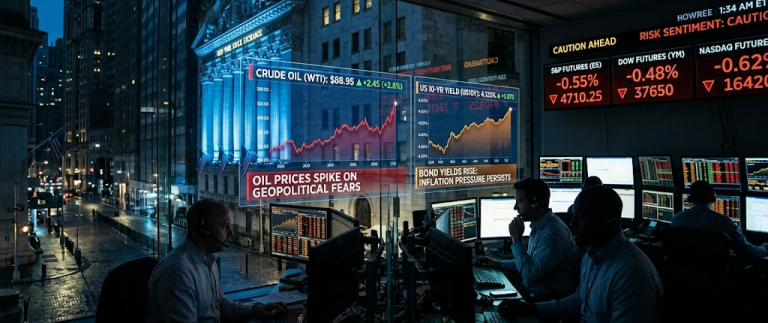
Overnight, markets stayed locked in a simple but punishing chain reaction: Middle East war risk kept oil elevated, higher oil fed inflation fears, inflation fears pushed bond yields higher, and higher yields kept pressure on equities. By about 6:57 a.m. ET, Dow futures were down 0.41%, S&P 500 futures were down 0.44%, and Nasdaq 100 futures were down 0.65%. Reuters also reported that the Nasdaq had already fallen 2.4% on Thursday and now sits roughly 11% below its late-October peak, while the S&P 500 and Nasdaq are both tracking for a fifth straight losing week.
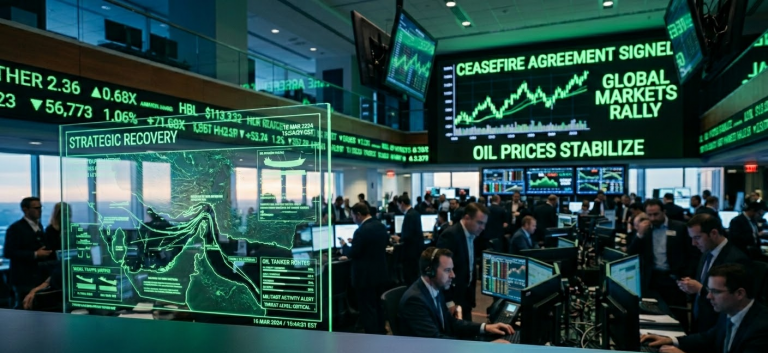
The overnight damage was not confined to Wall Street. Reuters reported MSCI’s Asia ex-Japan index fell 0.6%, and Europe’s STOXX 600 dropped 0.7% to 0.8% in early trade as investors concluded that another U.S. delay on strikes against Iran’s energy infrastructure did not materially reduce the risk of a longer conflict or a prolonged disruption around the Strait of Hormuz. That matters because the strait normally carries about one-fifth of global energy flows, and the market is still trading as though any diplomatic progress remains fragile and reversible.
Rates and currencies reinforced the same message. Reuters reported the U.S. 10-year Treasury yield climbed to about 4.456%, its highest since July, while the dollar index hovered around 100 and is on pace for its best month since July 2025, up 2.4% in March. The yen weakened toward 160 per dollar, a level traders view as intervention-sensitive, while markets flipped from expecting Fed cuts before the war to pricing roughly a 70% chance of a rate hike this year. Fed Governor Michael Barr added to the hawkish tone, warning policymakers must stay vigilant against a rise in inflation expectations tied to the oil shock.
Commodities and alternative risk gauges told a similar story. Reuters said Brent crude rose around 2% to roughly $110 a barrel, while gold rebounded 1.1% to $4,425.39 an ounce after hitting a four-month low earlier in the week. In crypto, Bitcoin traded at $66,660, down 3.86% from the prior close. Canada looked only marginally sturdier, with TSX futures down 0.2% as higher oil and gold prices offered some cushion for the resource-heavy index. The key focus into the cash open is whether investors treat this as another oil-driven de-risking wave, or whether they start selectively buying weakness in beaten-down growth and quality cyclicals.
Pre-Market News Catalysts
- Unity Software (U) rose about 12.3% to 14.7% in premarket trading after reporting preliminary first-quarter revenue of $505 million to $508 million, above prior guidance of $480 million to $490 million. Benzinga also said adjusted EBITDA came in at $130 million to $135 million, above the company’s prior $105 million to $110 million target.
- Southland Holdings (SLND) plunged more than 30% after investors refocused on a weak quarter. Benzinga reported fourth-quarter revenue dropped to $104.0 million from $267.3 million a year earlier, with a $193.4 million gross loss and a $216.4 million net loss, overshadowing the company’s recently announced $118 million in new project awards.
- Globavend Holdings (GVH) surged about 36.9% in after-hours action heading into the premarket. Benzinga said there was no confirmed fresh corporate trigger, but traders appeared to be reacting to recent SEC insider filings and to the company’s previously reported strong 2025 results, including 42.5% year-over-year revenue growth.
- GMEX Robotics (GMEX) jumped about 42.2% after hours after announcing an AU$4.2 million, roughly US$2.9 million, purchase agreement for at least 50 AI-powered kitchen robots. That was described as the company’s first commercial agreement with a restaurant group since launching the platform in December 2025.
The Day’s Debate (The Bull vs. Bear Case)

The Bull Case: The constructive argument is not that the tape looks healthy, because it does not, but that the selloff may be creating a more attractive setup in U.S. equities than the headlines imply. Reuters reported Barclays has raised its S&P 500 earnings per share estimate for 2026 to $321 from $305 and lifted its index target to 7,650 from 7,400, arguing that U.S. nominal growth remains stronger than in other major economies and that technology still provides a secular earnings engine.
Reuters also noted consensus 2026 tech earnings growth has climbed to 42.5%, while the sector’s valuation multiple has compressed to around 21, the lowest in three years. HSBC Private Bank likewise said it remains overweight U.S. equities because of resilient growth, solid corporate earnings, and continued innovation. MarketWatch added a softer version of the same view, arguing that slower growth and productivity gains could limit the inflationary pass-through from higher oil. In that interpretation, the market may be overpricing a 2022-style inflation spiral and underpricing the resilience of U.S. corporates, especially megacap and high-quality software names that have already been heavily rerated.

The Bear Case: The bearish case is easier to see because it is what markets are trading right now. Reuters reported Brent crude near $110, a U.S. 10-year yield around 4.456%, and a futures curve that no longer prices any Fed easing this year. The dollar is strengthening on safe-haven demand, the yen is nearing intervention territory, Europe is weakening, and U.S. equities are rolling over into the weekend after the Nasdaq confirmed a correction.
Fed Governor Michael Barr warned that the central bank must be vigilant against a rise in inflation expectations, which is exactly the policy backdrop equity bulls do not want when growth-sensitive sectors are already under pressure. MarketWatch’s more cautious read is that the real danger may not stop with inflation. If oil remains elevated long enough, it can destroy demand, squeeze margins, hit consumer confidence, and tip the economy from an inflation scare into a recession scare. Add in continued uncertainty around the Strait of Hormuz and reports of possible additional U.S. troop deployments, and the market has little incentive to price in a clean de-escalation before it sees tangible proof.
The Strategic Takeaway
The most important thing to keep in mind before the opening bell is that this is no longer just an oil story. It is now an oil-plus-rates story, and that combination is much harder for equities to absorb. Higher crude on its own can often be treated as an energy-sector tailwind. Higher crude paired with rising Treasury yields, a stronger dollar, and vanishing Fed-cut expectations is a broader tightening of financial conditions.
That is why growth stocks, duration-sensitive assets, and smaller caps remain vulnerable even when diplomacy produces occasional relief headlines. Traders should watch whether oil continues rising after the open and whether the 10-year yield stays pinned near its recent high. If both remain firm, any early equity bounce may struggle to hold.
Upcoming Session Outlook with Directional Bias
Directional bias: Slightly Bearish. The premarket setup points to a cautious, headline-sensitive open, with the downside pressure strongest in tech and rate-sensitive growth, while energy, gold-linked names, and some Canadian resource exposure may hold up relatively better. A durable intraday rebound likely needs some combination of softer oil, a pullback in Treasury yields, or credible de-escalation headlines. Without that, the path of least resistance still looks lower to sideways, not decisively risk-on.
Disclaimer
Disclaimer: This article is for informational purposes only and does not constitute financial, investment, or legal advice. The information provided is a synthesis of publicly available data and expert analysis and should not be considered a recommendation to buy or sell any security. Investing in the stock market involves risk, including the possible loss of principal. Past performance is not indicative of future results. Readers should consult with a qualified financial advisor to determine an investment strategy that is suitable for their own personal financial situation and risk tolerance.
Sources
- Reuters, US stock futures slip as Iran strike delay offers limited relief
- Reuters, Stocks resume slide as Trump extension fails to calm markets
- Reuters, Dollar cashes in on safe-haven demand, set for best month since July
- Reuters, Fed’s Barr: Need to be vigilant against rise in inflation expectations
- MarketWatch, S&P 500 futures drop to session lows as Israeli defense minister says it will escalate attacks on Iran
- MarketWatch, $120-a-barrel oil may be a tipping point that shifts the Fed’s focus from high inflation to recession threat
- Benzinga, Unity Software Surges Over 14% In Pre-Market
- Benzinga, Southland Holdings (SLND) Stock Plunges Over 30% As Rally Loses Steam)