


Morning Market Snapshot – March 18, 2026
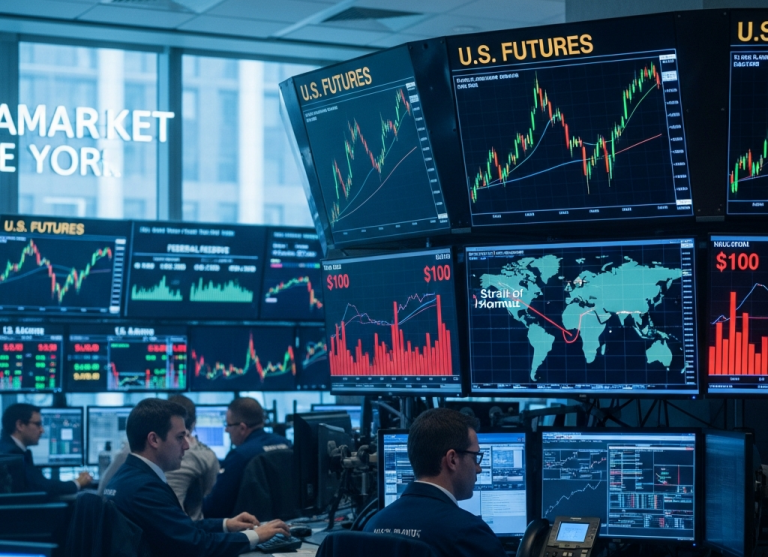
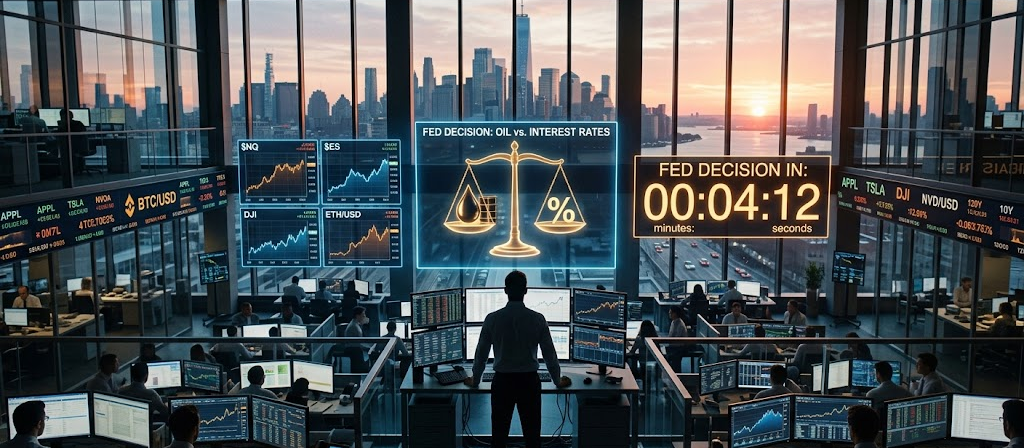
The overnight tone was constructive, but it was not carefree. Markets moved from outright energy anxiety toward cautious relief after oil prices pulled back from recent highs, allowing global equities and U.S. futures to recover some ground ahead of today’s Federal Reserve decision.
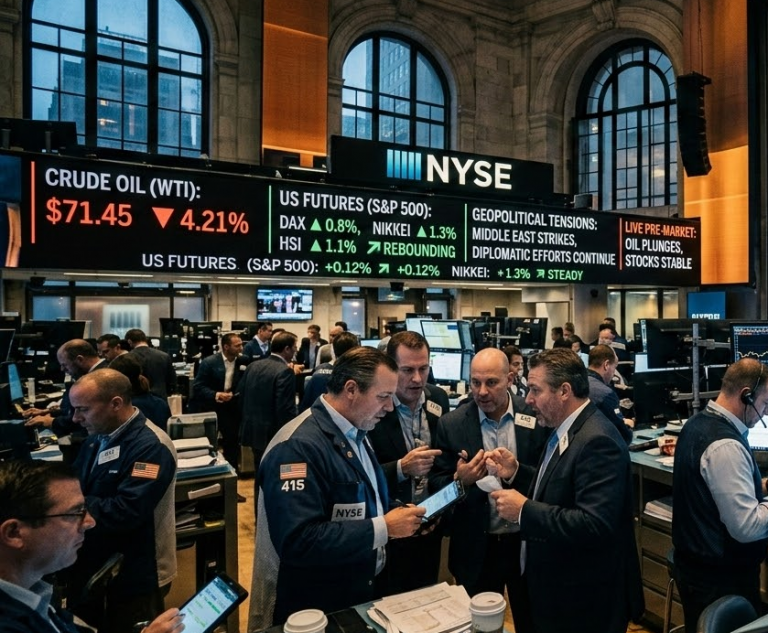
The most important overnight move was in crude. Reuters, MarketWatch, and AP all reported that oil fell as Iraq resumed exports through Turkey’s Ceyhan route, easing at least some immediate supply stress. Reuters said Brent crude traded around $103.14 and U.S. crude around $94.67, while MarketWatch cited WTI near $93.89 and Brent near $102.34 in pre-market coverage. Oil is still historically elevated, but the market cared more about the change in direction than the absolute level. The message from the overnight tape was clear: if crude stops surging, equities can breathe again.
That change in oil direction fed directly into a global rebound. AP reported broad gains across world markets, while Reuters said Japan’s Nikkei rose more than 2 percent, South Korea’s market rallied sharply, and European stocks advanced for a third straight day. Reuters added that the STOXX 600 rose about 0.5%, with travel and leisure stocks up 1.1%, a sign that lower fuel pressure immediately improved cyclical sentiment. In short, markets treated the oil pullback as an invitation to rotate back into risk rather than remain fully defensive.
U.S. futures reflected the same logic. Reuters reported that Dow, S&P 500, and Nasdaq futures all rose in pre-market trade, supported by lower oil and firmer AI-related sentiment. The overnight tone was also helped by stock-specific news in semiconductors, with Nvidia and AMD both up about 1 percent in pre-market action. Even so, the deeper issue did not disappear. The Financial Times reported that economists still see the oil shock as a threat to growth and a possible reason for slower or fewer Fed cuts, particularly if crude remains near $100. That is why the overnight rally felt more like a reprieve than a resolution.
Pre-Market News Catalysts
- Nvidia (NVDA): Reuters reported that Nvidia gained about 1% in pre-market trading after China approved the sale of its H200 AI chip there, improving sentiment around one of the market’s most important leadership stocks.
- AMD (AMD): Reuters said AMD rose about 1% after deepening its AI memory relationship with Samsung, reinforcing the overnight bid for semiconductor and infrastructure names.
- Delta Air Lines (DAL): Reuters reported that Delta and other travel-related names rose more than 1% as easing oil prices helped investors reassess fuel-cost pressure on airlines and leisure stocks.
- Lululemon (LULU): Reuters said Lululemon fell about 2% in pre-market trading after issuing a weaker 2026 outlook, making it one of the clearer stock-specific drags before the open.
The Day’s Debate (The Bull vs. Bear Case)

The Bull Case: The optimistic interpretation is that markets just passed an important stress test. Oil was the central overnight macro risk, and once it stopped moving higher, buyers returned quickly to global equities, U.S. futures, and cyclical sectors. Reuters, AP, and MarketWatch all described a firmer tone tied directly to the retreat in oil prices. Europe’s travel and leisure stocks outperformed, U.S. airline names bounced, and AI leaders regained momentum, which suggests traders still want exposure to growth and risk when the inflation shock appears even modestly less severe. This matters because markets do not need perfect conditions to rally. They only need conditions that are less bad than feared.
There is also a second bullish argument. Even with oil still elevated, the move lower overnight may reduce pressure on the Fed to sound dramatically more hawkish today. Reuters reported that the Fed is still expected to hold rates steady, and MarketWatch’s scenario analysis suggested that if the oil shock does not intensify, policymakers may be able to stay on hold rather than shift toward outright tightening. In that framework, the market can continue to stabilize because the worst case, a rising oil spiral paired with a sharply hawkish Fed, is not what the overnight session priced in.
Bulls would say the tape is signaling that the economy still has enough resilience for investors to buy dips in tech, travel, and other growth-sensitive areas as long as crude remains contained.

The Bear Case: The bearish interpretation is that the overnight rally may be built on relief, not repair. Crude eased, but it remained near levels that are still uncomfortable for inflation, corporate margins, and consumer spending. Financial Times reported that economists see the oil shock as a meaningful threat to U.S. growth and a likely reason that rate cuts could be delayed. Reuters also noted that the Fed is confronting a difficult policy debate because higher energy costs can keep inflation sticky even as the labor market softens. That is a classic stagflation risk, and a one-night pullback in oil does not erase it.
The second bearish argument is that markets may underestimate how long this uncertainty will last. MarketWatch noted that even with Iraq resuming exports, analysts warned that physical shortages and regional instability could continue to keep pressure on energy markets. AP made the same broader point by describing the geopolitical backdrop as still highly unstable even as stocks rose. Reuters added that gold slipped as investors leaned toward a higher-for-longer rate view, another signal that macro stress has not disappeared. Bears would argue that the overnight bounce leaves the market vulnerable if Powell acknowledges a more persistent inflation threat, or if oil resumes climbing later today. In that case, the rebound in futures and cyclical stocks could prove temporary.
The Strategic Takeaway
The key thing to keep in mind as the opening bell approaches is that the market is trading a pause in stress, not the end of stress. Overnight action improved because oil stopped getting worse, and because investors found enough stock-specific reasons to rotate back toward semiconductors, airlines, and other risk assets. Reuters, FT, and AP all support that reading. But the larger macro question remains unresolved: does the Fed view this oil shock as temporary noise, or as an inflation problem serious enough to delay policy relief for much longer?
For traders, that means the overnight green tape should be treated as conditional. If crude continues easing and the Fed sounds patient, the risk rally can extend. If oil reverses higher or the Fed leans harder into inflation concerns, the positive overnight tone can fade quickly. The overnight session improved sentiment, but it did not eliminate the macro tripwire sitting under the open.
Upcoming Session Outlook with Directional Bias
The expected tone for the U.S. open is Slightly Bullish, but fragile. Futures are higher, oil is off the highs, Europe and Asia traded better, and AI-linked names are supporting sentiment. At the same time, the move remains dependent on the same two drivers that shaped the last 15 hours: oil stability and the Fed’s interpretation of inflation risk. The opening bias is constructive, but conviction is limited because traders still do not know whether today’s relief move is the start of stabilization or just a temporary pause before the next macro shock.
Disclaimer: This article is for informational purposes only and does not constitute financial, investment, or legal advice. The information provided is a synthesis of publicly available data and expert analysis and should not be considered a recommendation to buy or sell any security. Investing in the stock market involves risk, including the possible loss of principal. Past performance is not indicative of future results. Readers should consult with a qualified financial advisor to determine an investment strategy that is suitable for their own personal financial situation and risk tolerance.
Sources
- Wall St futures gain as oil prices ease; Fed outlook in focus | Reuters
- Morning Bid: Fed plot unfolds | Reuters
- Fed to signal rate hike an option? Possible, though unlikely | Reuters
- Oil price surge from Iran war will hurt US growth and slow interest rate cuts, economists warn. (Financial Times)
- Stocks set to climb as oil falls as traders await Fed decision – MarketWatch
- World shares advance as oil slips despite a barrage of attacks by Iran | AP News