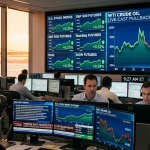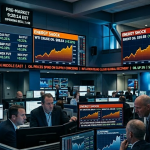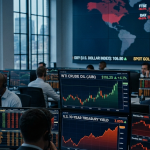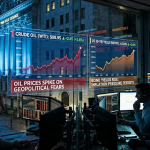

Morning Market Snapshot – April 1, 2026
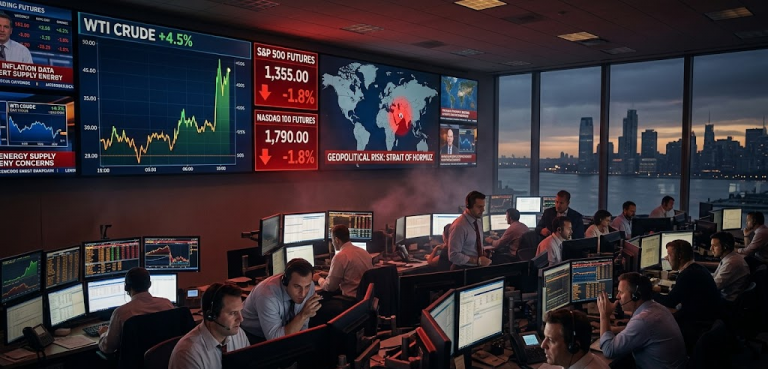
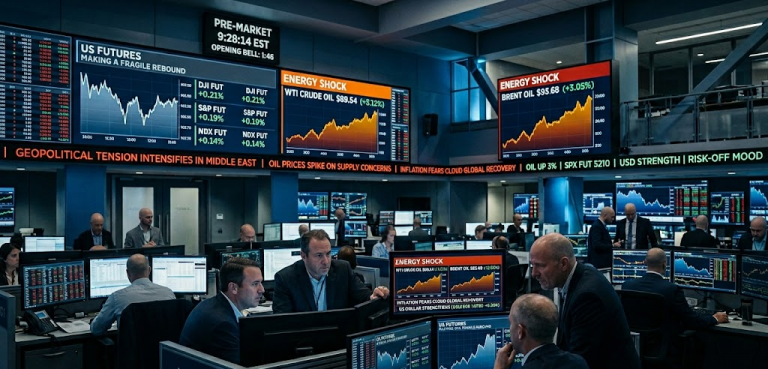
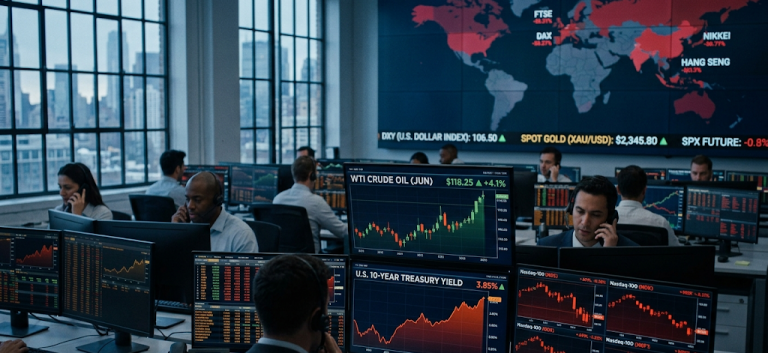
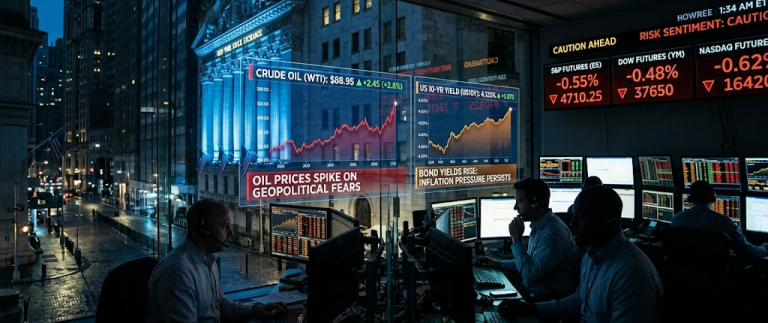
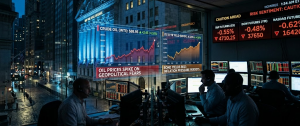
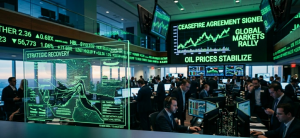
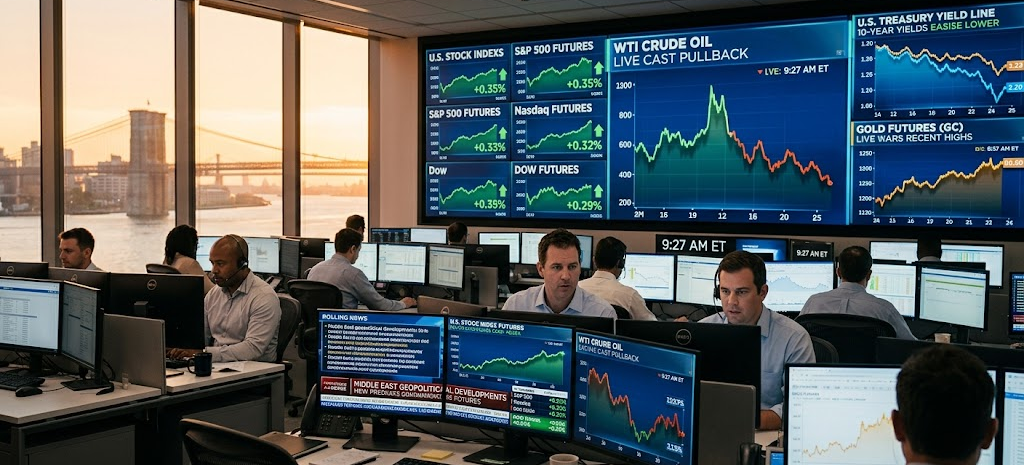
Dow futures were up 199 points, or 0.43%, S&P 500 futures were up 0.46%, and Nasdaq 100 futures were up 0.63%, while the VIX slipped to 24.85. The rally was global: Europe’s STOXX 600 rose 2.1%, led by banks, and MSCI’s Asia-Pacific benchmark outside Japan jumped 4.7%, its biggest one-day gain since November 2022. At the same time, the 10-year Treasury yield eased toward 4.28%, the dollar index slipped to 99.59, Brent crude traded near $102.94 after briefly dropping below $100, and spot gold climbed to about $4,723 an ounce.
What traders should focus on now is simple: oil, rates, and the 8:15 a.m. ET ADP payrolls print, 8:30 a.m. ET retail sales, 10:00 a.m. ET manufacturing surveys, Fed speakers Michael Barr and Alberto Musalem, and President Trump’s 9:00 p.m. ET update on Iran. Why it matters is equally simple: this is a headline-driven relief trade, and MarketWatch noted that futures already came off their highs when crude rebounded off session lows, which means the opening tone still hinges on whether energy keeps cooling or starts re-inflating the stagflation trade.
Pre-Market News Catalysts
- Nike (NKE): shares were down about 10.4% in pre-market trading after the company forecast a surprise fourth-quarter sales decline. Reuters reported that Nike expects current-quarter sales to fall 2% to 4%, with China sales projected to drop 20%, which is extending investor concern that the turnaround is moving too slowly.
- RH (RH): shares fell 18.6% after the luxury furniture retailer missed fourth-quarter revenue expectations and forecast annual revenue growth below estimates, making it one of the sharpest large-cap losers before the bell.
- nCino (NCNO): shares jumped 20.8% after the banking software company forecast first-quarter revenue above estimates and announced an accelerated $100 million share repurchase program. Benzinga separately flagged the company’s earnings beat and upbeat guidance as the main drivers of the move.
- Beyond Meat (BYND): shares were down about 10.9% in pre-market trading after weak fourth-quarter results. Reuters said revenue fell 19.7% to $61.6 million, and the company guided first-quarter revenue to $57 million to $59 million, below expectations.
The Day’s Debate (The Bull vs. Bear Case)

The Bull Case: Overnight bulls have a coherent argument. The market is responding as if the March energy shock may have peaked, at least temporarily. Reuters quoted Mizuho strategist Evelyne Gomez-Liechti, who said markets are trading on the narrative that the war could be over or that the U.S. could withdraw, creating positive sentiment in risk assets. That optimism showed up in synchronized gains across Asia, Europe, and U.S. futures, as well as in falling Treasury yields and a softer dollar.
Europe’s banks rose 4%, airlines surged as oil dropped, and traders lifted the implied probability of a July Fed cut to 17.9% from 7.5% a day earlier. Bloomberg also noted that Brent briefly fell below $100 for the first time in a week, which matters because crude has been the central macro pressure point. Put differently, the bull case is that if conflict risk is no longer worsening, the market can begin to reprice away the worst inflation and growth fears that drove the overnight selloff in March.

The Bear Case: The bear case is that the market is celebrating headlines before the hard part is solved. Reuters quoted UBS Global Wealth Management saying that while signs of willingness to negotiate are positive, hurdles remain before an actual end to the conflict, and a resumption of energy flows may take longer still. UBS strategist Kiran Ganesh added that Iran may want to preserve the leverage it has gained in the Strait of Hormuz, and that renewed escalation remains possible while U.S. troops remain in the region. Bloomberg added another layer of skepticism, reporting that some Wall Street traders think positioning, not peace, is driving the bounce.
The Bank of England strengthened the bearish macro case by warning today that the war has increased threats to financial stability and raised the risk of overlapping shocks across debt markets, private credit, and richly valued U.S. technology stocks. MarketWatch’s observation that futures faded when oil bounced back above $100 reinforces the point: as long as crude remains volatile and the strait remains largely impaired, this rebound is vulnerable to reversal.
The Strategic Takeaway
The single most important thing to keep in mind before the bell is that crude, not futures, is still the cleaner signal. My read is that traders are willing to buy equities when oil is falling, and yields are easing, but they are not yet willing to price in a durable all-clear. Reuters, Bloomberg, and MarketWatch all point to the same cross-asset pattern: risk assets improve when the market believes the war premium in energy is shrinking, then enthusiasm cools when oil rebounds.
That means the most useful lens into today’s open is not whether S&P futures stay green by a few tenths, but whether Brent can hold near the low-$100s and whether the 10-year yield stays near 4.28% rather than lurching back higher. Inference, not certainty: if those two gauges stay calm, dip buyers likely keep the upper hand at the open.
Upcoming Session Outlook with Directional Bias
The expected tone into the open is constructive but fragile. Futures are positive, Asia and Europe both confirmed the relief bid, and Treasury yields are moving in the right direction for equities. Still, the rally’s foundation is geopolitical hope rather than verified normalization in shipping or energy flows, and tonight’s 9:00 p.m. ET Iran update keeps event risk alive. Directional bias for the U.S. open: Slightly Bullish, provided crude stays contained near current levels and this morning’s data do not reignite stagflation fears.
Disclaimer: This article is for informational purposes only and does not constitute financial, investment, or legal advice. The information provided is a synthesis of publicly available data and expert analysis and should not be considered a recommendation to buy or sell any security. Investing in the stock market involves risk, including the possible loss of principal. Past performance is not indicative of future results. Readers should consult with a qualified financial advisor to determine an investment strategy that is suitable for their own personal financial situation and risk tolerance.
Sources
- Reuters, US stock futures climb as Iran war resolution hopes lift sentiment.
- Reuters, World markets rocket higher on optimism Iran war could end soon.
- Reuters, Europe’s STOXX 600 jumps 2% on Middle East de-escalation hopes.
- Reuters, Gold nears 2-week high as dollar drops on hopes Iran war may end soon.
- Bloomberg, Trump’s Latest Signal Gives Beleaguered Markets a Boost For Now.
- Barron’s, U.S. Treasury Yields Drop as Investors Hopeful Over Mideast Developments.
- MarketWatch, Stock futures off their highs as oil rebounds off session lows.
- Reuters, Nike forecasts surprise sales drop as China weakness hurts turnaround efforts.
- AP, Oil falls and world shares jump on renewed hopes of Iran war ending.