Morning Market Snapshot – February 26, 2026
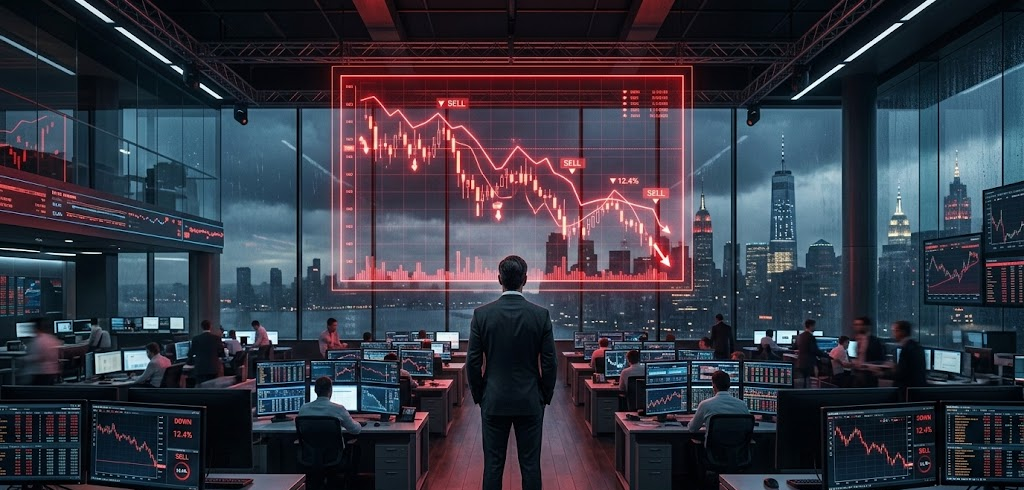
The final trading session of February begins with a heavy atmosphere as Wall Street grapples with what analysts now call the “AI scare trade.” This phenomenon represents a sharp pivot in sentiment. Investors previously viewed artificial intelligence as an unalloyed growth engine, but now increasingly view it through the lens of labor disruption and capital overextension. The S&P 500 is currently positioned to close the month in the red. This comes after a whirlwind four weeks that saw technology bellwethers lose the momentum that carried the index through 2025.
The primary catalyst for this morning’s somber mood is a combination of disappointing infrastructure earnings and unsettling corporate commentary regarding AI integration. Traders are closely monitoring the fallout from Block CEO Jack Dorsey’s decision to reduce his workforce by 40%. His stated reasoning—that labor-saving AI has made large swaths of the staff redundant—has sent a chill through the broader tech sector. This narrative shifts the focus from AI as a “revenue generator” to AI as a “disruptive force” that may indicate a peaking economic cycle.
Fixed-income markets are providing a vivid backdrop to this equity volatility. The 10-year Treasury yield has dipped below the 4% threshold to 3.98%. This move suggests a flight to safety as participants increase their bets on a Federal Reserve interest rate cut by July. While lower yields typically support tech valuations, the current environment sees investors favoring havens like gold and government debt over high-growth equities.
Global factors add further complexity to the session. While European and Asian markets have shown pockets of resilience, U.S. futures remain under pressure. The morning’s focus will center on whether the “risk-off” sentiment persists or if the recent selloff in chipmakers has created an attractive entry point. Market participants are bracing for a volatile open as they weigh the benefits of cooling inflation against the structural anxieties of a changing technological landscape.
Pre-Market News Catalysts
- Dell Technologies Inc. (DELL): Shares surged 11% in pre-market trading. The company issued a strong sales forecast for its AI-optimized servers, suggesting that while software faces headwinds, the physical hardware buildout remains robust.
- Netflix Inc. (NFLX): The streaming giant rose more than 7% after announcing it will no longer bid for Warner Bros. Discovery. Investors are cheering the disciplined capital allocation, leaving Paramount Global as the likely suitor for the Warner assets.
- Block Inc. (SQ): The stock jumped nearly 20% following an earnings report that featured a massive restructuring plan. CEO Jack Dorsey’s commitment to cutting 4,000 jobs via AI automation has polarized the market, trading immediate margin expansion for long-term labor concerns.
- CoreWeave Inc. (CRWV): The cloud computing firm tumbled 11% after reporting a wider-than-expected fourth-quarter loss. The company missed its adjusted operating margin estimates, fueling fears that the “AI infrastructure” trade is becoming increasingly expensive and less profitable.
The Day’s Debate (The Bull vs. Bear Case)

The Bull Case: Optimists argue that the current volatility is a healthy “cleansing” of a crowded trade rather than the end of the bull market. They point to the robust performance of hardware providers like Dell as evidence that the fundamental demand for AI remains intact. Sourced experts from firms like Saxo Banque suggest that Europe’s outperformance and the rotation into emerging markets show that global liquidity remains high.
Bulls emphasize that the 10-year Treasury yield dropping below 4% provides a significant valuation tailwind for equities in the medium term. They view the aggressive cost-cutting measures at companies like Block as a necessary transition to a higher-margin, AI-driven economy. This perspective holds that the “AI scare” is a temporary sentiment shift that will eventually give way to a more sustainable, broader-based rally.

The Bear Case: Pessimists contend that the market has entered a “peak-cycle” phase where good news is treated as a warning. Michael Burry and other skeptics have highlighted concerns over purchase obligations at major chipmakers, suggesting that the industry may soon face excess capacity if AI capital expenditures slow. The “AI scare trade” is viewed not as a dip to be bought but as a fundamental realization that AI’s disruptive power could undermine consumer spending by triggering mass layoffs.
Bears point to the S&P 500’s monthly loss as a sign that the “Magnificent Seven” leadership has permanently fractured. They argue that the widening losses at infrastructure players like CoreWeave prove that the AI buildout is a capital-intensive bubble with diminishing returns. With geopolitical uncertainty in the Middle East and lingering policy questions from the Trump administration, bears believe the path of least resistance for stocks is lower.
The Strategic Takeaway
The most critical factor for today’s session is the decoupling of AI “hype” from AI “reality.” We are moving from a phase in which any mention of artificial intelligence drove stocks higher to one in which the market demands proof of profitability and fears structural disruption. Investors should watch the 10-year Treasury yield closely; its stay below 4% signals a genuine fear of economic cooling.
The divergence between Dell’s hardware success and CoreWeave’s margin struggles indicates that picking winners in the tech space now requires granular analysis rather than broad-sector exposure. As the opening bell approaches, the focus is firmly on whether the labor-market anxiety triggered by Block will infect other sectors or if the market can find a floor in disciplined capital stories like Netflix.
Upcoming Session Outlook with Directional Bias
The market is expected to open defensively as investors process a heavy slate of earnings and geopolitical shifts. While individual winners like Dell and Netflix provide some support, the broader tech sector remains under the shadow of the “AI scare trade” and labor-disruption fears. The dip in Treasury yields confirms a rotation toward safety at the end of a volatile month.
Directional Bias: Slightly Bearish
Disclaimer: This article is for informational purposes only and does not constitute financial, investment, or legal advice. The information provided is a synthesis of publicly available data and expert analysis and should not be considered a recommendation to buy or sell any security. Investing in the stock market involves risk, including the possible loss of principal. Past performance is not indicative of future results. Readers should consult with a qualified financial advisor to determine an investment strategy that is suitable for their own personal financial situation and risk tolerance.
Sources
- Bloomberg/Swissinfo: Stock Futures Fall as 10-Year Yield Dips Below 4%
- Investing.com: Netflix, Block and Dell rise premarket; Warner Bros and CoreWeave fall
- Morningstar/Dow Jones: U.S. Futures Fall as Risk-Off Mood Continues
- BNN Bloomberg: World shares mostly higher in week dominated by AI news
- Charles Schwab: Nvidia Throws a Party but Few Attend as Rally Ebbs