




Morning Market Snapshot – February 19, 2026
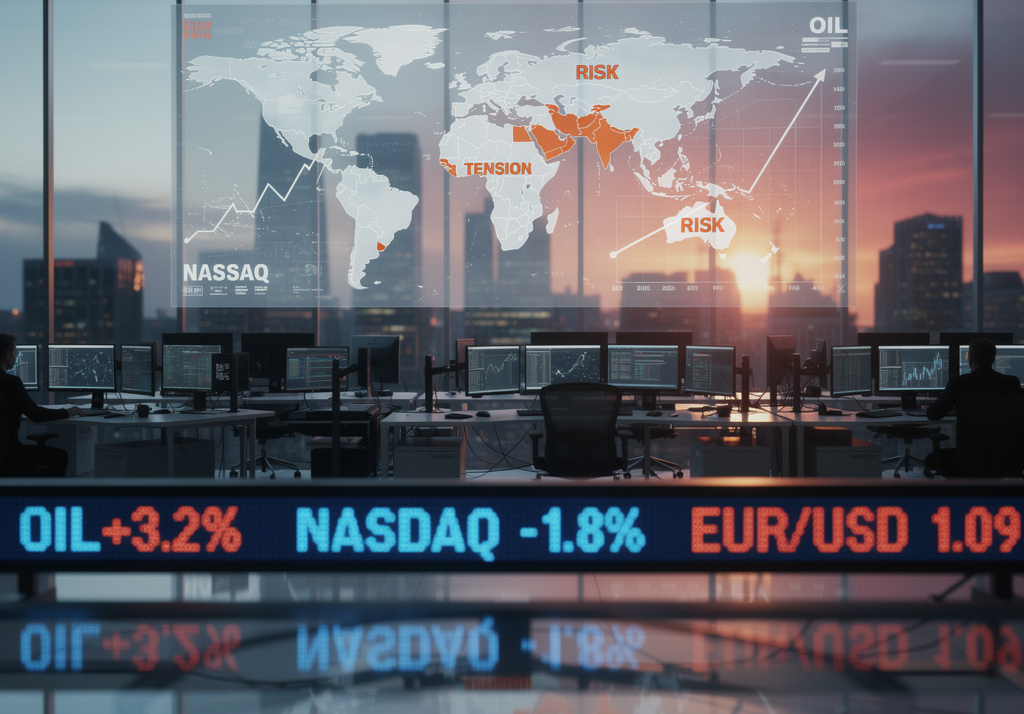
The relative calm characterizing recent trading sessions vanished in the pre-market hours of Thursday, February 19, 2026. Global investors are currently recalibrating portfolios amid a surge in geopolitical risk and a hawkish shift in Federal Reserve expectations. S&P 500 futures have retreated 0.3%, while Nasdaq 100 futures are leading the decline with a 0.4% drop. This shift in sentiment follows a period of buoyancy led by the semiconductor sector, but the focus has moved abruptly from corporate growth to global instability.
The primary catalyst for this morning’s “risk-off” environment is the escalating tension between the United States and Iran. Reports of stalling nuclear talks in Geneva, coupled with warnings from the United Nations nuclear watchdog that the window for diplomacy is closing, have sent shockwaves through energy markets. Brent crude has decisively breached the $71 mark, while West Texas Intermediate (WTI) approaches $66 per barrel. For equity traders, this represents a double-edged sword: rising input costs for industrial sectors and a renewed threat of energy-led inflation that could complicate the Federal Reserve’s path toward interest rate normalization.
Simultaneously, the bond market continues to reflect a “higher for longer” reality. The 10-year Treasury yield is currently hovering near 4.10% after Federal Reserve minutes from the January meeting revealed a significant internal debate. While market participants still hope for two to three rate cuts this year, the minutes showed that some policymakers remain open to further hikes if inflation does not reach the target. This hawkish undertone is weighing heavily on the “Magnificent Seven” and broader technology stocks, which are particularly sensitive to shifts in the discount rate. Investors must now decide if the robust underlying strength of the U.S. economy can withstand the combined pressure of rising yields and a potential energy crisis.
Pre-Market News Catalysts
- DoorDash (DASH): Shares are up 6.8% in pre-market trading. Despite missing consensus estimates for both revenue and earnings per share in the fourth quarter, investors are focusing on strong operating momentum and aggressive expansion in European markets.
- Rio Tinto (RIO): The mining giant’s stock fell 3.4% following its financial results. Although the company reported a 9% increase in underlying EBITDA, the market reacted negatively to rising net debt levels and a tragic operational accident at its Simandou site.
- Walmart (WMT): The retail bellwether is down 1.7% in early action. Traders are showing caution ahead of the company’s full earnings report and potential commentary on how rising freight costs and geopolitical uncertainty might impact consumer spending and margins.
- Nvidia (NVDA): After leading a tech rally in the previous session on the back of an expanded deal with Meta Platforms, the chipmaker is seeing a slight cooling in the pre-market as part of a broader “Magnificent Seven” retreat amid rising yields.
The Day’s Debate (The Bull vs. Bear Case)

The Bull Case: Optimistic strategists argue that the current dip is a classic overreaction to headlines and offers a tactical entry point into high-quality growth stocks. The bull case rests on the undeniable resilience of the U.S. consumer and the transformative power of artificial intelligence. Recent economic data has consistently surprised to the upside, with industrial production and manufacturing orders for long-lasting goods exceeding forecasts.
Experts point out that while the Federal Reserve minutes were cautious, the overwhelming probability remains a pause in hikes followed by a pivot. Furthermore, the robust earnings power demonstrated by tech leaders suggests that corporate America can navigate a period of elevated rates. These analysts believe that the shift in capital toward “clean, firm power” and high-tech infrastructure will provide a multi-year tailwind for the market that far outweighs temporary geopolitical spikes in oil prices.
The Bear Case: The pessimistic view focuses on the “supply-side purge” and the threat of stagflation. Bearish analysts highlight that while equity prices remain near historical highs, the physical “goods economy” is flashing warning signs. Sustained contractions in freight volumes suggest a deeper structural weakness that the AI-driven tech rally is masking.
The bear case emphasizes that the 10-year Treasury yield pushing toward 4.1% is a signal that the market’s expectation of rapid rate cuts was premature. With the U.S. budget deficit projected to reach $1.9 trillion this year, fiscal dominance is becoming a tangible risk that could force the Fed to keep rates high despite slowing growth. Pessimists also argue that the “risk-off” move into oil and gold is just the beginning of a broader rotation as investors seek safety from the dual threats of a Middle East conflict and a domestic debt crisis.
The Strategic Takeaway
The single most important theme for the session ahead is the transition from “growth at any cost” to “macro-sensitivity.” For months, the market has successfully ignored geopolitical noise and hawkish Fed rhetoric by focusing on the AI revolution. However, the $71 oil breach and the 4.1% Treasury yield represent technical and psychological levels that are harder to dismiss. Traders should monitor the U.S. Dollar Index and Brent crude closely during the first hour of trading.
If oil continues its upward trajectory, expect defensive sectors like utilities and aerospace to outperform, while high-multiple software and consumer discretionary stocks may face sustained selling pressure. The opening bell will likely reveal whether the market views this geopolitical flare-up as a transient headline or a structural shift in the risk landscape.
Upcoming Session Outlook with Directional Bias
The pre-market data suggests a cautious start for the major indices as the intersection of rising energy prices and stubborn bond yields dampens appetite for risk. While individual earnings stories like DoorDash provide pockets of strength, the overarching weight of the “Magnificent Seven” retreat and global tensions point toward a defensive posture for institutional desks. Investors should prepare for a session marked by volatility as the market attempts to find a floor amid escalating international headlines.
Directional Bias: Slightly Bearish
Disclaimer: This article is for informational purposes only and does not constitute financial, investment, or legal advice. The information provided is a synthesis of publicly available data and expert analysis and should not be considered a recommendation to buy or sell any security. Investing in the stock market involves risk, including the possible loss of principal. Past performance is not indicative of future results. Readers should consult with a qualified financial advisor to determine an investment strategy that is suitable for their own personal financial situation and risk tolerance.
Sources
- Bloomberg: Stocks Retreat as Brent Pushes Further Above $70
- Finviz: Why Is DoorDash Stock Soaring Thursday?
- Investing.com: Rio Tinto Q4 2025 Earnings Transcript
- Simply Wall St: S&P 500 Futures Nudge Higher on Firm Growth
- Benzinga: Stock Market Today: S&P 500, Nasdaq 100 Futures Fall
- CTV News: World shares are mixed following Wall Street rally